More Than a Bedtime Story: How Reading to Your Baby Builds the Brain, Strengthens Your Bond, and Nurtures a Lifetime of Learning
More Than a Bedtime Story: How Reading to Your Baby Builds the Brain, Strengthens Your Bond, and Nurtures a Lifetime of LearningBy Phoebe VinceOne of the questions I hear most often is, "Does reading…
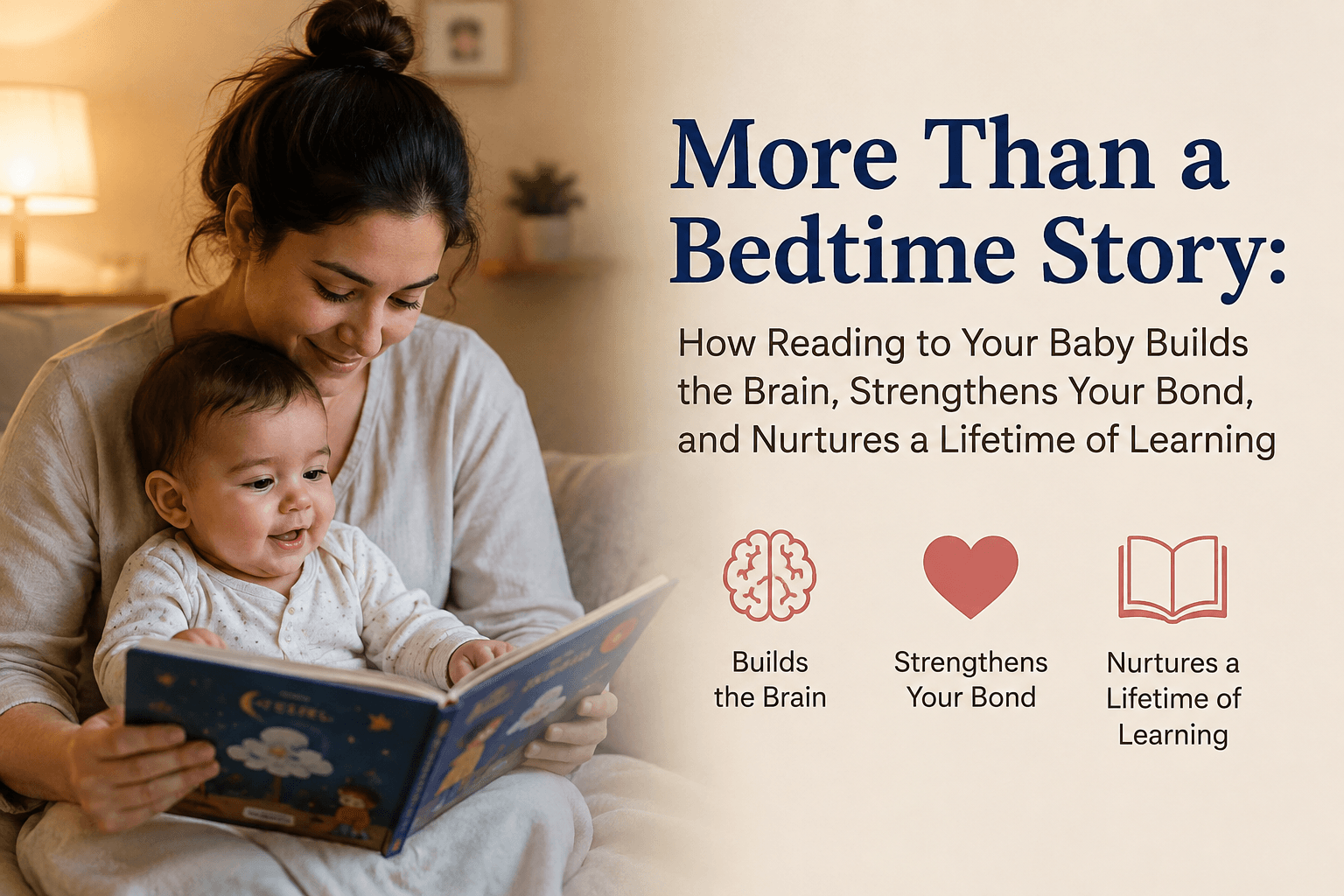
More Than a Bedtime Story: How Reading to Your Baby Builds the Brain, Strengthens Your Bond, and Nurtures a Lifetime of Learning
By Phoebe Vince
One of the questions I hear most often is, "Does reading to a baby really matter when they're too young to understand the words?"
My answer is always the same.
Absolutely.
In fact, some of the most important benefits of reading happen long before a child can speak their first word.
As someone with a degree in Early Childhood Development, I don't see a children's book as simply a story. I see it as an opportunity to help create one of the most important relationships a child will ever have—the relationship between that child and the loving adult sitting beside them.
Whether that's a parent, grandparent, foster parent, or caregiver, those quiet moments spent reading together become something much bigger than words on a page.
They become moments that help build a child's brain.
A Baby's Brain Is Under Construction
During the first year of life, a baby's brain is developing at an extraordinary pace.
The brain is constantly asking questions.
"Is this world safe?"
"Who loves me?"
"What do voices sound like?"
"What happens when I smile?"
Every loving interaction helps answer those questions.
Reading together gives babies a remarkable combination of experiences all at once.
They hear language.
They see faces.
They watch expressions.
They learn the rhythm of conversation.
They feel the warmth of being held.
The American Academy of Pediatrics recommends reading aloud beginning at birth because shared reading strengthens early attachment, stimulates developing brain circuitry, and supports language, cognitive, and social-emotional development during this critical period of growth. (AAP Publications)
The Real Magic Happens Between the Pages
People sometimes think books teach children.
I see it a little differently.
The book creates the opportunity for people to teach children.
When a baby looks up from a page and sees someone smiling...
When a caregiver points to a puppy and says, "Look!"
When a grandparent laughs while making animal sounds...
The baby's brain isn't simply processing language.
It's learning relationships.
The pages become a reason to cuddle a little longer.
To make eye contact.
To smile.
To talk.
To laugh.
Those shared experiences become part of the child's understanding of love, comfort, communication, and security.
Your Body Is Part of the Story Too
One of the fascinating things about early childhood development is that our bodies are designed to support close relationships.
When parents hold, cuddle, speak gently to, or lovingly interact with their babies, the hormone oxytocin—often called the "bonding hormone"—plays an important role in strengthening emotional connection and trust between caregiver and child.
Pleasant, nurturing interactions are also associated with activation of the brain's reward system and reductions in stress, helping both adults and babies feel calm, connected, and emotionally secure.
While people often hear serotonin and endorphins mentioned in discussions about feeling good, scientists are more cautious about assigning those chemicals to any one activity. What the research clearly supports is that warm, responsive interactions—including reading together—help create the kind of emotionally positive experiences that foster healthy brain development and secure attachment. (AAP Publications)
Reading Is Really a Conversation
One of my favorite things about babies is that they "talk" long before they use words.
They blink.
They smile.
They wiggle.
They point.
They coo.
They reach for the page.
When we pause during a story and respond to those little signals, we're having a conversation.
That's exactly what healthy brain development needs.
Researchers have found that literacy promotion beginning in infancy encourages families to establish shared-reading routines that continue throughout the first year and beyond. Those early routines become part of everyday family life and create repeated opportunities for language-rich interaction between babies and their caregivers. (Reach Out and Read)
Small Moments Become Big Building Blocks
Parents sometimes worry they need to read an entire book from beginning to end.
You don't.
Some days your baby may only look at three pages.
That's okay.
Some days they may want to chew on the corner.
That's okay too.
Some days you'll spend five minutes pointing at pictures and making silly sounds.
That counts.
Those little moments accumulate.
Research consistently shows that children who experience frequent shared reading from infancy develop stronger language skills, richer home literacy environments, and healthier social-emotional foundations than children who experience less shared reading. (AAP Publications)
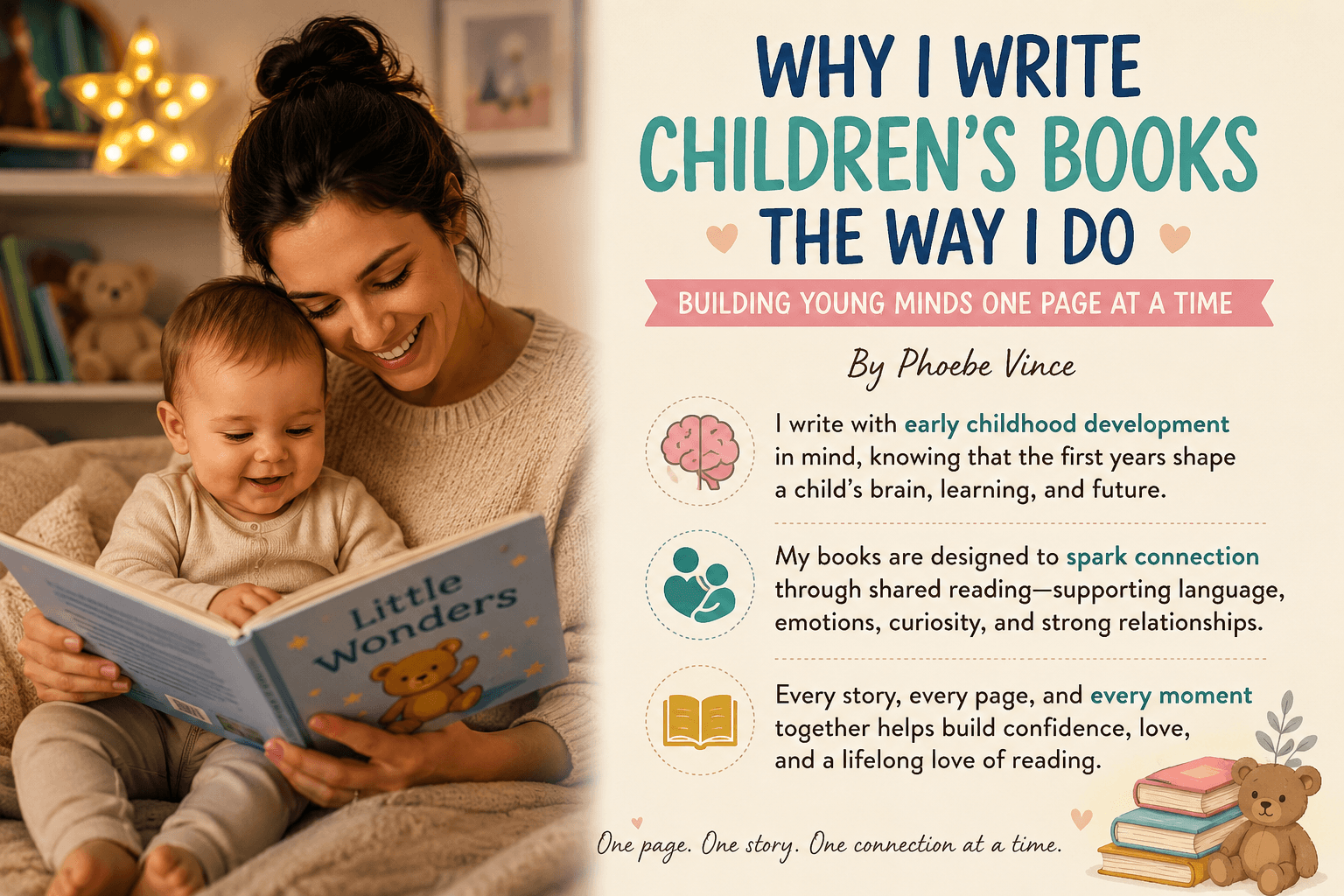
Why I Write the Way I Do
Because of my background in Early Childhood Development, I don't design books only to entertain.
I deliberately think about the child sitting on someone's lap.
I think about the parent slowing down after a busy day.
I think about the grandparent making funny voices.
I think about the little finger pointing at a bunny for the very first time.
Every page I create is designed to invite interaction.
Simple words.
Warm illustrations.
Gentle repetition.
Moments to pause.
Opportunities to smile.
Not because babies need complicated stories.
But because they need meaningful moments with people who love them.
A Gift That Lasts Long After the Book Closes
Long after a child forgets the exact words of a story, something much more important remains.
They remember how it felt.
Safe.
Loved.
Held.
Heard.
Those feelings become part of the foundation upon which confidence, curiosity, empathy, and learning are built.
If one of my books encourages a family to spend just ten extra minutes together each day—reading, laughing, cuddling, and talking—then I believe that book has done something truly worthwhile.
Because in the end, the greatest story isn't the one printed on the page.
It's the one being written between a child and the person who loves them enough to read it aloud.
Research referenced
American Academy of Pediatrics. Literacy Promotion: An Essential Component of Primary Care Pediatric Practice (2024 Policy Statement): Reading together from birth strengthens attachment and supports brain, language, cognitive, and social-emotional development. (AAP Publications)
American Academy of Pediatrics. Literacy Promotion: Technical Report (2024): Reviews evidence that shared reading supports healthy brain development, nurturing relationships, language acquisition, and resilience to stress. (AAP Publications)
Sinclair EM, McCleery EJ, Koepsell L, et al. Shared Reading Practices and Early Literacy Promotion in the First Year of Life. Journal of Developmental & Behavioral Pediatrics (2019): Found that families established shared-reading routines during the first year, supporting sustained literacy habits and caregiver-child interaction. (Reach Out and Read)