Why I Write Children's Books the Way I Do
I write children's books inspired by my background in early childhood development and my passion for helping young children learn and grow. I design every story to encourage meaningful shared reading experiences that nurture language, emotional development, and strong caregiver-child bonds. My hope is that every book creates lasting moments of connection and inspires a lifelong love of reading and learning.
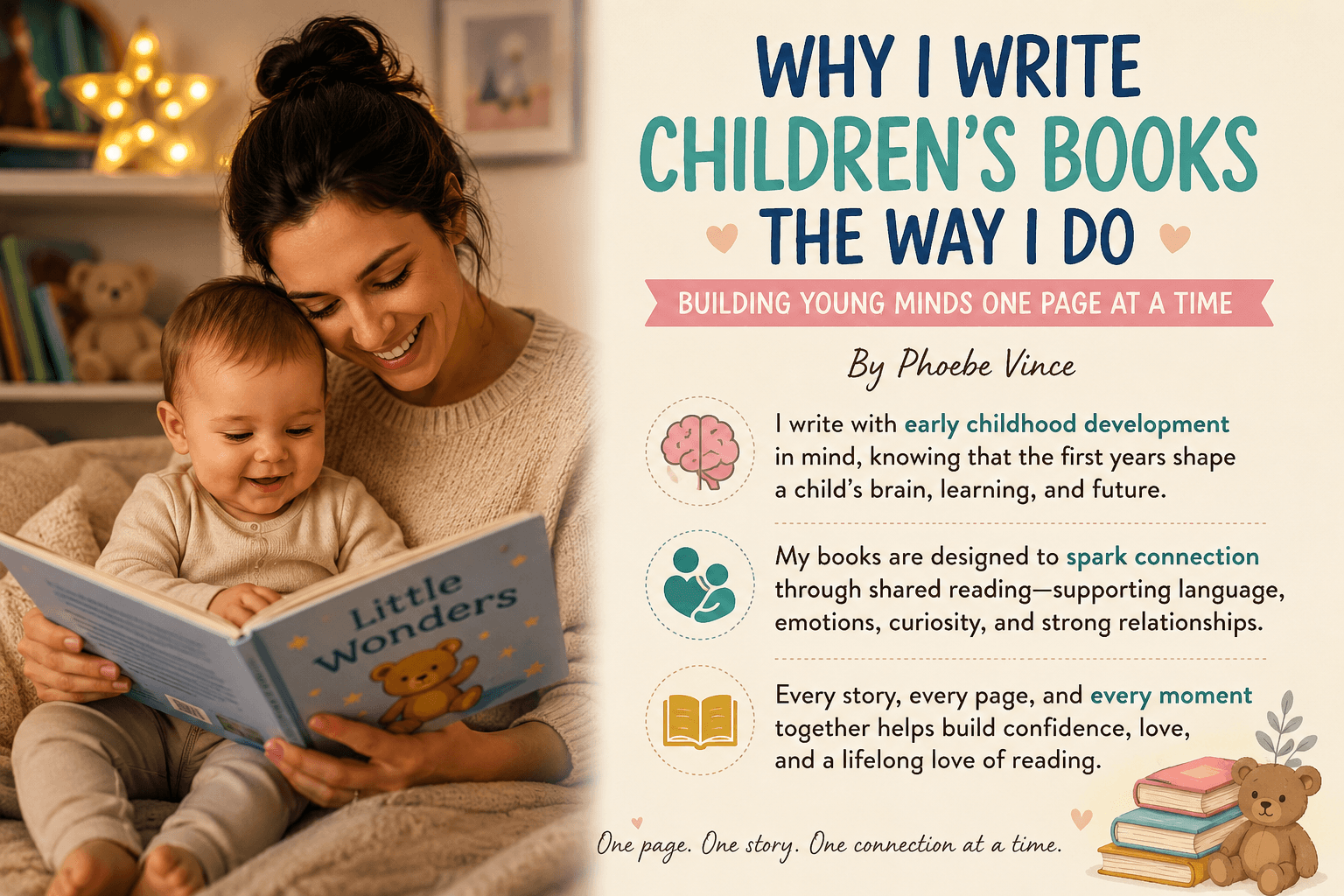
Why I Write Children's Books the Way I Do
Building Young Minds One Page at a Time
By Phoebe Vince
People often ask why I chose to write children's books.
The answer begins long before I ever wrote my first story.
I earned my degree in Early Childhood Development because I have always been fascinated by one simple question:
How do young children learn?
The more I studied early childhood development, the more I realized something remarkable. During a baby's first year of life, the brain develops at an astonishing pace. Millions of new neural connections are formed as babies experience the world through loving interactions, familiar voices, faces, sounds, touch, and play. Those early experiences become the foundation upon which future learning is built.
That realization changed the way I think about children's books.
I don't simply want to write stories.
I want to create experiences.
The Magic Isn't Just in the Book
One of the biggest misconceptions about reading to babies is that the goal is simply to expose them to words.
The science tells us something much more interesting.
The real benefit comes from shared reading.
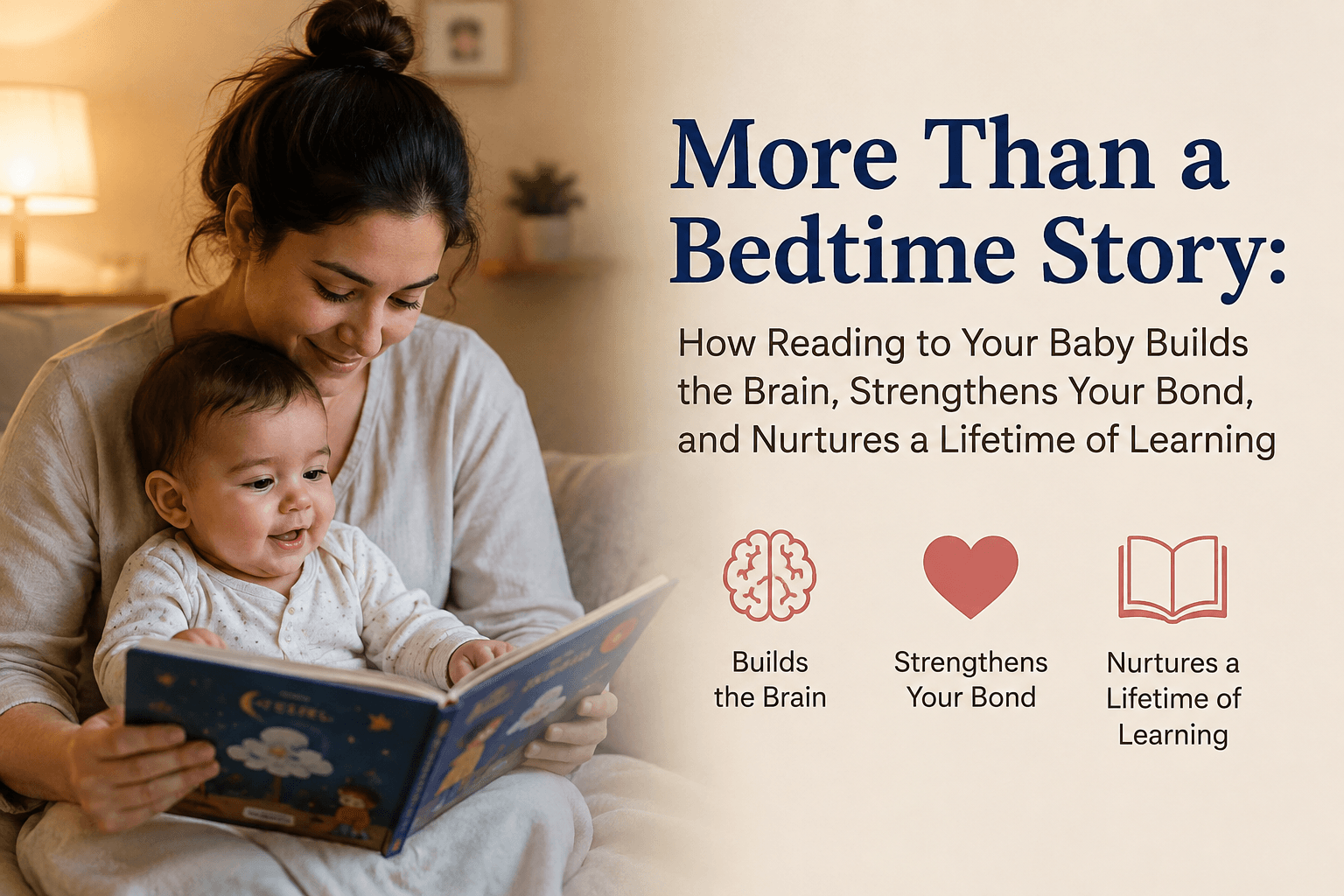
When a parent, grandparent, or caregiver holds a baby close and reads aloud, something wonderful happens. The child hears the rhythm of language. They study facial expressions. They listen to changes in tone and emotion. They look back and forth between the page and the person reading. They begin connecting words, pictures, voices, and feelings into meaningful experiences. Shared reading supports language, social-emotional development, cognitive growth, and the nurturing relationships that help children thrive.
In other words, the book is only part of the experience.
The relationship is what makes the experience powerful.
Every Page Should Have a Purpose
Because of my background in early childhood development, I think differently when I'm designing a children's book.
I'm not asking only, "Is this story entertaining?"
I'm also asking questions like:
Is this page simple enough for an infant's developing attention span?
Will these illustrations naturally invite eye contact between the reader and child?
Does the rhythm encourage expressive reading?
Are there opportunities for the caregiver to point, smile, laugh, pause, or ask a simple question?
Does the repetition help babies recognize patterns?
Will the ending leave both child and caregiver feeling calm, connected, and ready to read again tomorrow?
Every creative decision has a purpose.
Growing With the Child
Babies are constantly changing during their first year.
A newborn sees the world very differently than a ten-month-old.
That means books should grow with them.
For the youngest babies, I love bold illustrations, simple shapes, and gentle, rhythmic language.
As babies grow, they begin recognizing familiar faces, anticipating repeated phrases, and connecting words with pictures. Later, they begin pointing, babbling, turning pages, and responding to familiar routines.
A thoughtfully designed book can meet children where they are developmentally while gently encouraging the next stage of growth.
Reading Is About More Than Reading
One of my favorite things about children's books is that they create moments that families often remember for years.
The same chair.
The same blanket.
The same favorite page.
The same giggle every time the puppy appears.
Those little routines become something much bigger than a bedtime story.
The American Academy of Pediatrics recommends reading together beginning at birth because shared reading helps build healthy brain development, language, literacy, and strong caregiver-child relationships during one of the most important periods of development.
As an author, that inspires me every day.
Designing Books That Invite Interaction
When I write, I deliberately leave room for conversation.
Sometimes that means repeating a phrase that babies can begin to anticipate.
Sometimes it means creating an illustration that invites pointing.
Sometimes it's a playful expression that encourages a smile.
Sometimes it's simply giving the adult permission to pause and enjoy the moment instead of rushing to the next page.
Those pauses matter.
Those smiles matter.
Those shared moments matter.
Because every conversation, every laugh, every cuddle while reading together is helping build not only a child's growing brain, but also a relationship that can last a lifetime.
My Hope for Every Family
If there is one thing I hope families take away from my books, it isn't that children memorize every word.
It's that they remember how reading together felt.
If my books encourage one more cuddle before bedtime…
One more laugh…
One more conversation…
One more "Let's read it again!"…
Then I've accomplished something meaningful.
As someone who studied early childhood development and now has the privilege of writing for young children, I believe every book can do more than tell a story.
It can become a bridge.
A bridge between learning and love.
Between curiosity and confidence.
Between a caregiver and a child.
Those are the connections I hope to help build—one page, one story, and one shared reading experience at a time.